
Why We Invested in Intersec: European Sovereignty Meets Mission-Critical Software
By Jérémie Falzone, Partner at Revaia.
When Revaia announced our investment in metadata and location intelligence provider Intersec alongside Tikehau Capital, we were making two important statements for European software.
The first is about what we believe European growth equity can accomplish: backing European software companies with strategic, mission-critical products to scale globally and build leading tech champions. This has been at the core of Revaia’s identity from the start. The second signals a strategic evolution in how Revaia approaches the market: Intersec represents our second private equity buyout transaction, following our acquisition of a majority position in FASST, a major French player in digital acceleration for insurers, last year.
This isn't a departure from who we are. It's an expansion of what we can offer. The Intersec deal illustrates precisely why this evolution makes sense for Revaia, for the companies we back, and for the European tech ecosystem at large.
Twenty Years of Building Mission-Critical Infrastructure
Founded in 2004, Intersec has spent two decades quietly becoming indispensable to governments and telecom operators, serving more than 50 customers across 27 countries. The company's cloud-native platform, Agora, processes terabytes of location and transactional data in real-time, connecting more than one billion people and devices worldwide.
The company has built a powerful technological moat whereas its technology serves three core markets:
- Civil protection systems allow authorities to send emergency alerts to everyone within a specific geographic area. If you've ever received a warning on your phone about a potential terrorist incident, a natural disaster, or a public health emergency, there's a good chance Intersec's technology powered it.
- Intersec homeland security solutions help law enforcement track dangerous individuals through metadata analysis, without accessing actual communications content.
- Its geolocation tools help mobile network operators deliver targeted services based on location data.
What makes Intersec particularly compelling is the regulatory tailwind behind this business. European Union directives now mandate that member states implement civil protection alerting systems. This isn't a discretionary IT budget line; it's compliance spending that must happen.
The civil protection and homeland security markets are expanding rapidly, with sustained double-digit growth. Combined, these markets offer structural demand that insulates Intersec from typical enterprise software cyclicality.
The company's financial profile reflects this positioning, combining strong recurring revenue growth, high retention levels and a profitable model, the kind of metrics that resonate strongly with growth investors.
The Investment Thesis
I first encountered Intersec several years ago; Even then, CEO Yann Chevalier was exploring strategic options, but he was clear about one thing: any investor would need to share his vision for keeping Intersec European. At the time, our paths weren’t meant to cross yet. But at Revaia, this vision is fully aligned with our mission and identity.
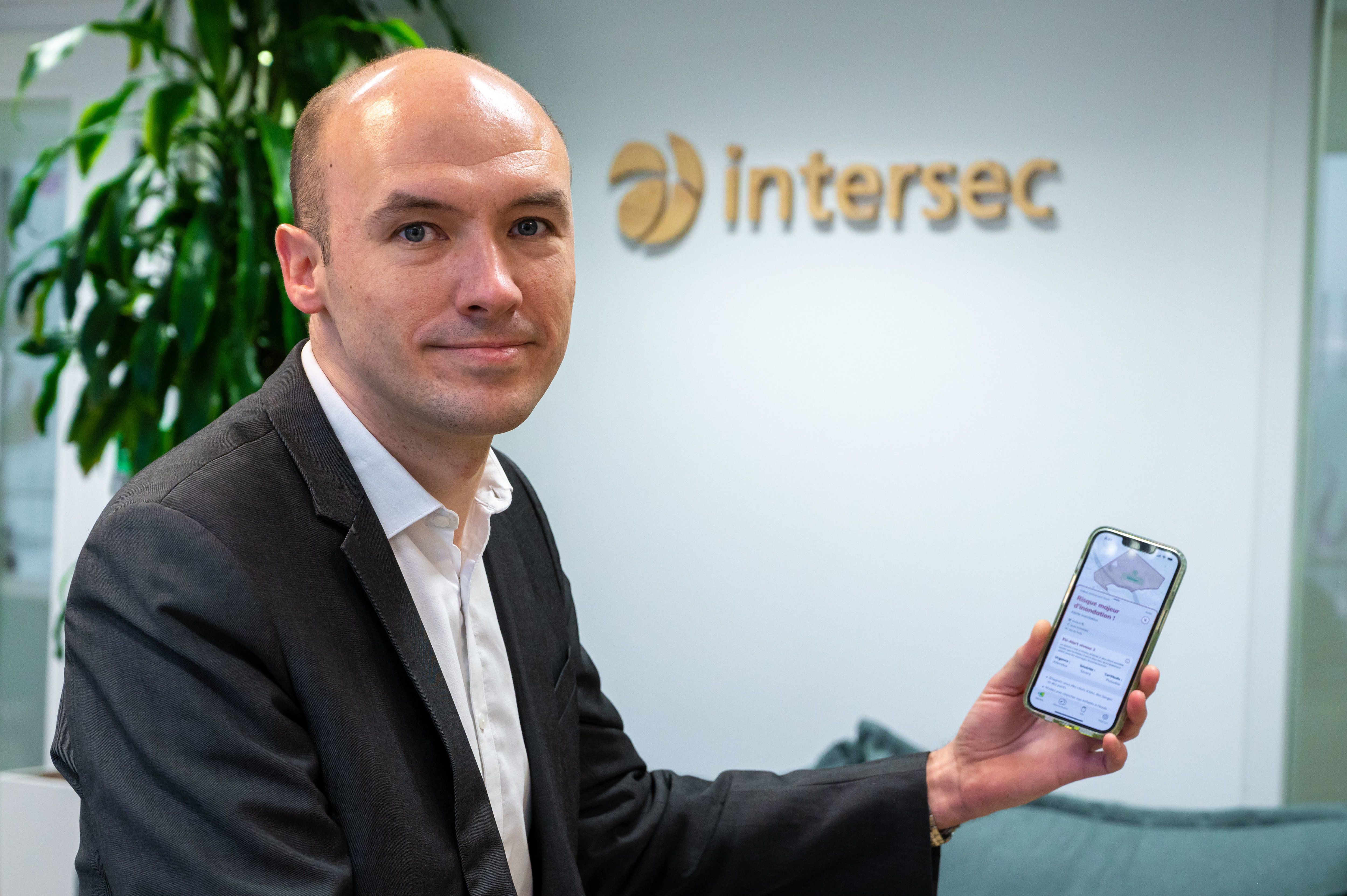
Yann Chevalier, CEO & Co-Founder
When the investment bank Macquarie approached us about the process they were running for Intersec, the timing aligned perfectly. The company was in exclusive negotiations with Tikehau Capital, which was looking for a co-investor to complete the ticket.
Intersec had attracted interest from international acquirers. But the management team understood certain ownership structures could create regulatory and operational complexity, given the nature of the company’s customers and use cases. When your customers are European interior ministries, and you're processing sensitive location data for homeland security purposes, ownership structure matters.
This is where Revaia's positioning proved decisive. We are, unapologetically, a European investor. We only invest in software companies. And we bring operating expertise that demonstrates we understand both the technical complexity of what Intersec does and the strategic implications of its market position.
European digital sovereignty isn't just a marketing language for us. It's a competitive advantage for companies like Intersec and a strategic priority for the governments and enterprises they serve.
The company's approach to data protection aligns with the privacy principles that European regulators have championed. Intersec's technology processes metadata such as information about location and device identifiers, without accessing the actual content of communications. They're helping governments maintain security without building mass surveillance infrastructure. That's a meaningful distinction in a world increasingly concerned about the privacy implications of location tracking technology.
Furthermore, for European or even non-European ministries of the interior, for telecom operators serving European populations, the ability to work with a European vendor deploying on private cloud infrastructure with no risk data of leakage is increasingly material to procurement decisions.
This dynamic extends beyond Europe. Across multiple regions, including Africa and Asia, public authorities and telecom operators are increasingly seeking alternatives that offer strong guarantees around data protection, regulatory alignment and long-term accountability for sensitive, mission-critical applications Intersec’s positioning resonates particularly well in these markets.
The geopolitical context here is important. Rising tensions between major powers, growing regulatory scrutiny of cross-border data flows, and European initiatives to reduce dependency on non-EU technology providers all create tailwinds for companies like Intersec. We're not betting on politics; we're recognizing that the regulatory environment favors European providers of mission-critical infrastructure, and that advantage compounds over time.
There's another dimension to this investment that deserves attention. Intersec's technology has a genuinely positive social impact. This has also been a core pillar of Revaia’s mission from day 1, something that matters to us and increasingly to our limited partners.
When civil protection systems work properly, they save lives. When a wildfire threatens a community, when a chemical spill occurs near a populated area, when authorities need to alert residents to shelter in place during a security incident, these are moments where seconds matter. Intersec's ability to identify and reach every mobile device within a geographic boundary, in real-time, makes emergency response more effective.
Buyout strategy: Evolution, Not Revolution
Some observers might wonder why a growth equity firm is doing buyouts. The answer is that the European tech ecosystem has matured to the point where companies need different things at different stages.
Intersec had several financial sponsors on its cap table after eight years of venture and growth financing. That's not unusual for a company of their vintage, but it creates governance complexity that can slow decision-making precisely when speed matters most.
With this transaction, Intersec will have two primary investors: Tikehau Capital, acting as reference shareholder, Revaia, plus the management team. The simplified structure enables the company to pursue M&A aggressively, something that would have been nearly impossible with a fragmented shareholder base.
This is exactly the kind of situation where buyout discipline creates value. We're not changing the business model or bringing in outside operators to run the company. Yann and his co-founder Jean-Marc Coïc, both graduates of École Polytechnique, have built something exceptional over two decades.
But even after more than two decades, Intersec's ambitions are substantial. The path to accelerating growth runs through three vectors:
- First, continued organic growth in existing markets. Many countries still lack compliant civil protection systems. The company's geographic footprint is currently split across Europe, the Middle East, Africa, Asia-Pacific, and the Americas. That provides multiple avenues for expansion without needing to develop new products.
- Second, extension into adjacent markets. The same technology that protects civilian populations can help enterprises protect their employees. Energy companies operating in volatile regions, manufacturing facilities classified as sensitive infrastructure, and organizations with distributed global workforces all represent potential customers for Intersec's platform. This B2B resilience market is a natural expansion vector.
- Third, strategic M&A. The company has identified multiple acquisition targets that could add capabilities, expand geographic reach, or accelerate entry into new verticals. With simplified governance and committed capital from Tikehau Capital and Revaia, they can pursue these opportunities aggressively.
What Intersec needs now is capital for acquisitions, support for strengthening organizational capabilities for the next growth phase, and investors who understand their technology deeply enough to be useful board members.
That's what we do. We've spent years building expertise in enterprise software. We have operating partners who can engage substantively on product roadmaps and technology architecture. And we have networks across European software that can help identify M&A targets.
For Revaia, this investment exemplifies where we believe we can add the most value. Intersec doesn't need us to teach them how to build software or find customers. They need sophisticated capital partners who understand their market, respect their European identity, and can help them navigate the complexities of scaling a mission-critical technology business globally. This is what we're built to do.
Jérémie Falzone is a Partner at Revaia. He joined the firm in July 2025.