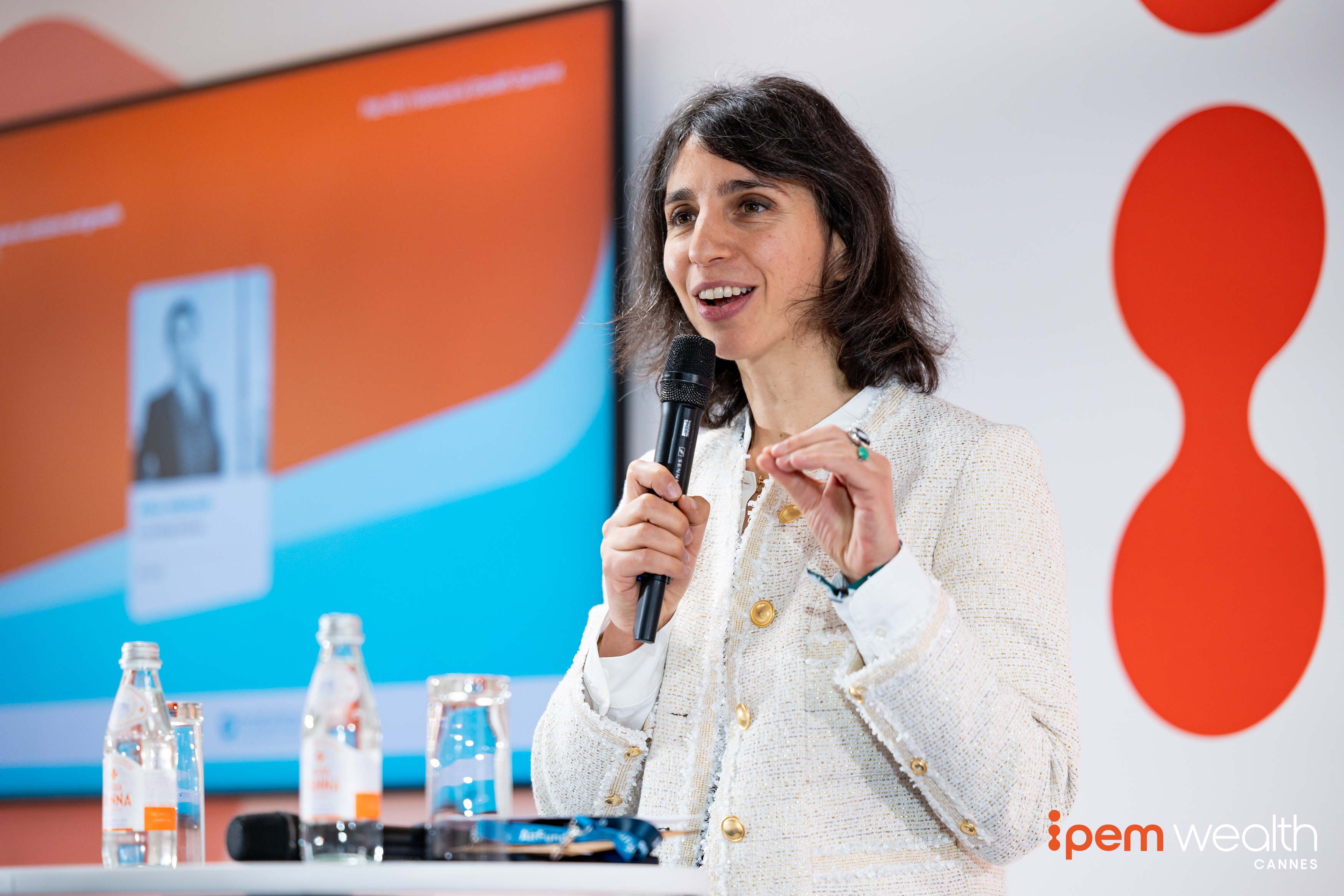
The Big Picture on Venture and Growth: Trends to Watch in 2026
By Alice Albizzati, Founding Partner.
Europe is entering a decisive phase where venture and growth capital converge, execution matters more than hype, and scale becomes a strategic capability across the ecosystem now.
Europe has crossed a threshold
For years, Europe has lived with the same paradox: world-class talent, strong research, promising startups, but limited ability to scale them into global champions.
I believe 2025 quietly marked a turning point.
Not because conditions became easier. They didn’t.
But because Europe started producing category leaders at scale, under constraint.
In the past 18 months:
• Sweden’s Lovable became one of the fastest-scaling companies Europe has seen.
• In France, Mistral raised €1.7bn to compete head-on with global AI leaders.
• Europe now counts eight decacorns, half minted in 2025 alone.
This matters, because it changes the question.
The question is no longer: “Can Europe produce champions?” The answer is yes.
It is: “How do we finance, govern, and scale them sustainably in a harsher world?”
And that world is harsher, structurally, not cyclically.
A structural shift, not a normal cycle
What we are experiencing is not a typical venture cycle.
It is a structural repricing of risk, time, and scale.
Globally, venture investment rebounded sharply in 2025. According to PitchBook, $512bn was invested worldwide, up from $391.9bn the year before, back to 2022 levels. AI represented 52.7% of total deal value.
At first glance, that looks like risk is back.
But look closer: the number of deals fell by 15% to 38k in 2025.
So capital is back, but it is far more concentrated.
That concentration is the real signal.
We are not going back to “spray and pray.”
We are entering a world where fewer companies absorb more capital, and are expected to justify it with real execution.
Europe’s ecosystem is now an economic pillar, but still underpowered at scale
Europe’s tech ecosystem is now worth around $4T across public and private markets and represents roughly 15% of Europe’s GDP, up from about 4% a decade ago.
That scale matters because it raises the stakes.
Europe has reached a level of maturity, but long-term competitiveness depends on whether it can turn promise into global strategic assets.
And that’s where the friction still shows.
Investment in Europe is rising again. Europe is on track to finish around $44B in 2025, still well below 2021.
More importantly: Europe’s private markets remain too shallow at growth stage, late-stage rounds are smaller, scarcer, and slower than in peer ecosystems.
So the question for 2026 is not “is the ecosystem alive?”
It clearly is.
The question is: can we mobilise growth capital at speed and at scale, fast enough to match the ambition of the best companies?
Growth capital in 2026 is selective, not scarce
Despite the noise, capital is still being deployed.
And the real friction point is not money.
It is price, and the credibility of value creation trajectories.
In 2026, discipline is not defensive.
It is alpha-generating.
Because the winners will be the funds - and the companies - that can translate ambition into:
• repeatable revenue,
• defensible margins,
• cash conversion,
• resilience under stress scenarios
• and path to liquidity
Liquidity: from an exit event to a capability
Another major shift is liquidity. IPO activity remains below historical norms.
And in private markets, distributions to LPs have been under pressure.
At the same time, globally, exit activity started to pick up again: global exit value reached $608B in 2025, up from $364B in 2024, approaching 2018 levels.
This matters because it improves conditions for recycling capital and for restoring the flywheel.
But the deeper shift is this:
Liquidity is no longer a single event at the end of the journey.
It has become a capability that needs to be governed over time.
This is why secondaries have moved from the margins to the center of private markets.
Secondaries, continuation funds, structured liquidity solutions, these are not signs of weakness.
They are signs of an asset class growing up.
For LPs, it changes portfolio construction: liquidity becomes optional.
For GPs, it changes governance: exits become processes, not moments.
In 2026, the best-performing funds will not be those that exit fastest, nor those that wait for ever.
They will be the ones that govern time of liquidity well.
AI: from capital magnet to productivity infrastructure
In terms of sectoral trends, AI remains the biggest capital magnet, but the conversation is shifting.
Whatever the hype cycle, one thing is certain: AI is not just software.
It is infrastructure and it is physical.
And Europe is gearing up: nearly 250 server farms are planned or underway across Europe, raising questions and opportunities about energy, grids, and local acceptance.
The question is: where does durable value concentrate?
And increasingly, it will concentrate in companies that:
• embed AI into mission-critical workflows, like in cybersecurity
• operate in complex or regulated environments, such as healthcare
• demonstrate measurable ROI,
• and earn retention and pricing power.
This is where Europe has a structural advantage.
Europe may not dominate foundation models yet, but it is exceptionally well positioned to lead in applied AI, where domain expertise, regulation, and industrial complexity create defensibility.
From software narratives to the physical economy: deep tech, resilience, security
Alongside AI, in a context of geopolitical, economical and environmental instability, we are seeing a decisive rebalancing toward the physical world.
It is not only about “hard problems.”
It’s about unavoidable priorities:
• energy systems,
• industrial productivity,
• cybersecurity,
• defence and resilience,
• advanced materials and supply chains.
Cyber is a clear example of the new reality: phishing and social engineering have surged, AI makes deepfakes easier, and the next threat is agentic systems, where attackers hijack AI helpers with hidden instructions. In that environment, “AI vs AI” becomes the operating condition.
In short: Europe’s next wave of breakout value is increasingly rooted in the physical world.
The LP lever: unlocking Europe’s own firepower to protect our sovereignty
Now, if we want Europe to fund champions at scale, there is one point that matters especially to this room.
Europe has deep pools of capital, but they are not yet mobilised at the levels needed for venture and growth.
European pension funds typically allocate around 0.01% of AUM to venture, while US pension funds allocate around 0.03%.
That sounds like a small difference, but it is enormous in consequence.
Matching US-level allocations alone could unlock roughly $210B for Europe’s venture ecosystem over the next decade.
That would be real firepower, not for “more deals,” but for more scale:
• larger late-stage rounds,
• more durable growth,
• and less forced dependence on external capital for Europe’s most strategic companies.
Practical takeaways : what to watch in 2026
As a wrap-up, if I had to leave this room with a simple 2026 scorecard, it would be this:
1) Capital is back, but it is concentrating.
The winners will be those who can justify scale with execution.
2) Liquidity is improving globally, but Europe must learn to govern time — secondaries are a feature, not a bug.
3) AI grows up. Value shifts from demos to deployment, from pilots to production systems that stick.
4) Europe’s physical economy is coming to the forefront: energy, industrial tech, cyber, resilience, vertical software.
5) Europe’s biggest unlocked advantage is its own balance sheet : pensions and long-term capital.
Conclusion : Why now ?
Europe has crossed a threshold.
The ecosystem is producing champions.
The ambition is real.
The strategic stakes are higher than ever.
And the future can be built here
if we accept discipline, execution risk, scale,
and the frameworks that make them possible.