Selling Out: How Two Founders Exited Their Companies and Lived To Tell the Tale
Contemplating the exit of a startup is one of the most intense business decisions a founder must make. It is also one of the most personal.
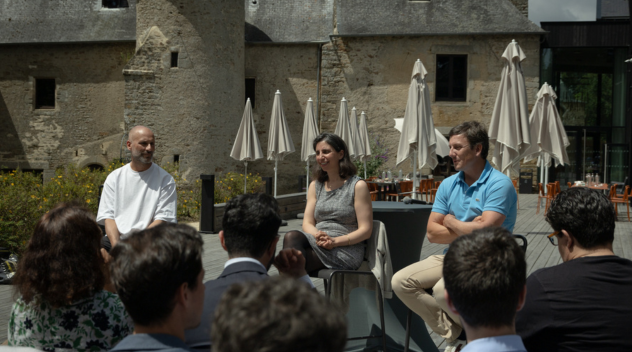
While deal announcements highlight metrics like revenue, customers, and valuation, the public only rarely gets a glimpse of the emotional journey that led the founders to that point. During Revaia’s annual Portfolio Days in July, we were fortunate to have two renowned French founders join us and pull back the curtain to discuss their respective exits from a human perspective.
Clément Buyse, Co-Founder of PeopleDoc, and Alex Pachulski, Co-Founder of Talentsoft, were involved with two of the most successful European exits over the past decade. PeopleDoc was acquired by Ultimate Software in 2018 in a deal valued at $300 million. Talentsoft was acquired by Cegid in 2021 in a deal of around half a billion dollars.
Both acquisitions were the result of various business factors converging at the right time with the right offer at the right price. However, the details of each exit journey were quite different. Clément and Alex discussed the circumstances that led to their exit decisions, the importance of mindset, and the lessons learned along the way.
Beyond navigating the business and financial aspects of an exit, both men said it is crucial to be introspective and know your personal goals and motivations when weighing the decision.
“I didn't plan to be an entrepreneur when I was young,” Alex said. “I didn't plan to sell either. I believe that an exit is an alignment of factors and signals, some that are intimate and some that are professional. Most of them don't really depend on you, but on the way the market consolidates or not. You have to be as clear as you can on what you are running after and try to be aligned with yourself. And being aligned with ourselves, it’s not always easy.”
The PeopleDoc deal
For PeopleDoc, the acquisition by Florida-based Ultimate Software (now UKG) in 2018 came after 5 years of growth and strategic expansion, both in Europe and in the U.S. While PeopleDoc founders described their exit scenario as a “zero regret decision,” Clément acknowledged some lack of internal conversations regarding the exit strategy prior to the deal: “Exit should not be a taboo word nor the end of the entrepreneurial journey. It’s a critical part of any startup lifecycle, where real preparation and understanding of everyone’s expectations can help navigate the many decisions that come with any potential deal.”
The complexity of the exit, from a process perspective, was linked to Ultimate Software being a publicly listed company. Clément described the ‘signing-closing” phase as “120 days in hell where you need not only the business to keep going while making the deal a reality.”
The acquisition not only offered PeopleDoc a robust financial backbone but also the opportunity to scale further and develop synergies with an established organization.

Alexandre Pachulski, co-founder Talentsoft / Clément Buyse, co-founder PeopleDoc Inc.
The Talentsoft deal
Talentsoft’s path to acquisition by Cegid was influenced by several factors, including market dynamics and personal motivations.
Alex was inspired to co-found the company because he wanted to help people be more fulfilled in their work. But after 15 years, the talent management market was changing pretty fast, as were the motivations and mindsets of people at work due to the Covid confinement. It was time to open a new page for Talentsoft.
The company had been approached several times about possible acquisitions over the years. While the offers were never quite high enough and the industrial strategies not relevant, there was another factor to consider: Talentsoft had long positioned itself as a European alternative to US tech companies. Selling to an American giant would have probably been badly perceived by employees and ecosystem.
But when French company Cegid came calling in 2021, the price and the timing finally felt right for both the company and Alex.
“The business is changing,” Alex said. “I’ve got personal projects I’d like to accomplish. And someone suitable is knocking at the door. It’s important to listen to what the signals are telling you. You are not necessarily the one setting the right timing.”
Advice for founders
Here are some of the key takeaways from Alex and Clement’s talk:
- Define a personal threshold for financial success, beyond which additional money becomes less important than other factors.
- Reflect on your long-term life goals and how an exit aligns with those, rather than solely focusing on maximizing financial gain.
- Consider the cultural fit and values alignment of potential acquirers, not just the financial offer.
- Be clear about your intentions and priorities from the early stages of the company, but remain flexible as circumstances change.
- Involve trusted team members and partners in exit discussions to gain different perspectives.
- Think about your desired role post-exit - whether you want to stay involved, move on to new ventures, or pursue personal interests.
- Regularly reassess if you're still the right person to lead the company through its next growth phase.
- Be prepared for the emotional aspects of an exit, including potential feelings of exhaustion or desire for change.
- Consider the impact on your employees and company culture when evaluating exit options.
- Don't let the possibility of an exit distract from running and growing the business effectively in the present.
The two co-founders shared a common message: Founders should understand that an exit – whatever the type or the circumstances – is not the end of the story.
Instead, it’s a major accomplishment that confirms the value that has been created and allows those who contributed to the success – including employees and investors – to share in those benefits. They also said that’s why it’s important to ensure that the whole company will benefit from a successful exit by managing the cap table and sharing equity.
“At the end of the story, will you just thank the people and say, ‘I earned a lot of money and you didn’t’?” Alex said. “Or do you want to share that? Because this happened thanks to their incredible work and you have to remember that you did not do it alone. So in the end, ‘congrats’ might not be enough.”