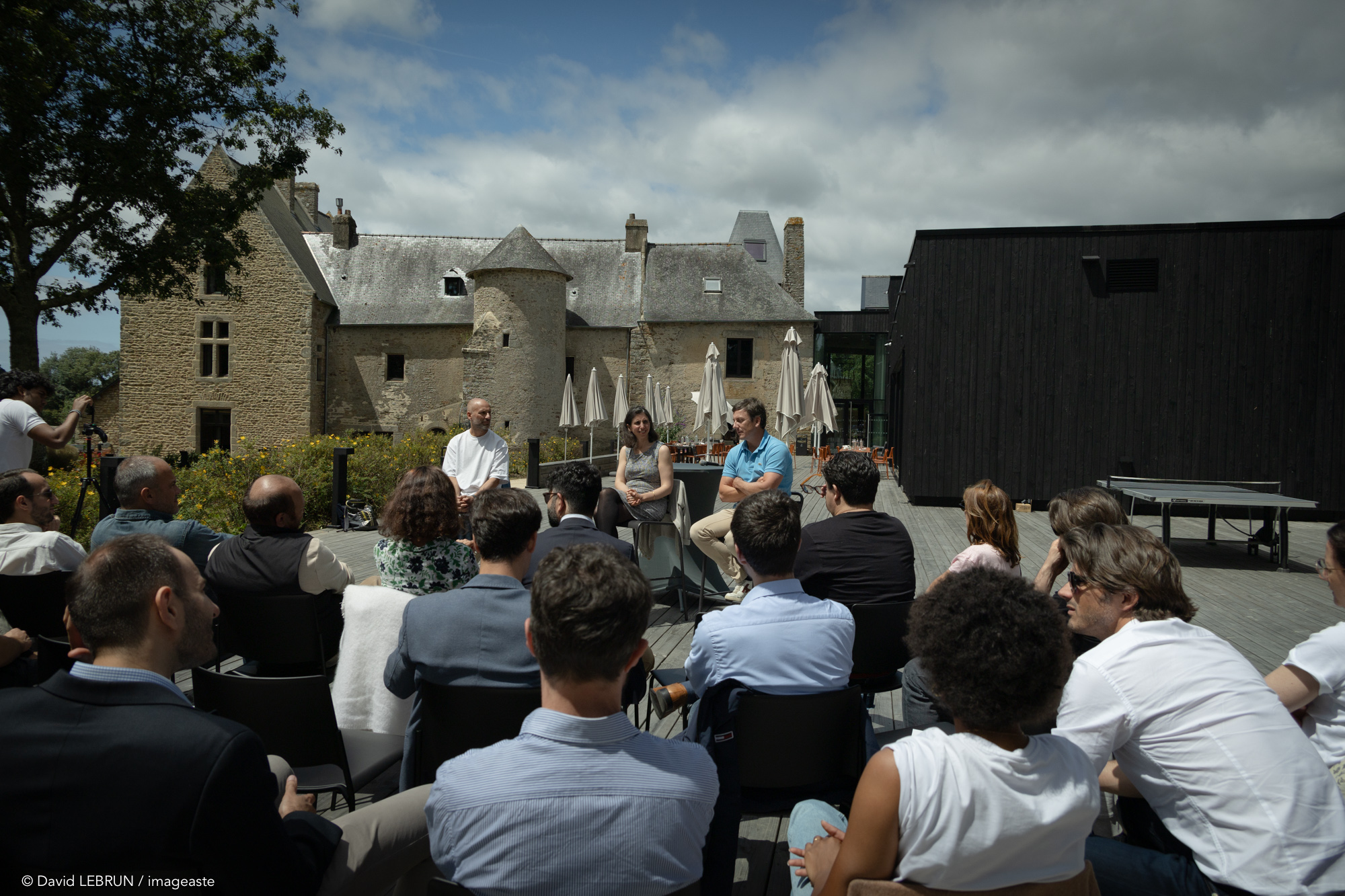
Lessons from Revaia’s community at Portfolio Days 2024
Revaia held its annual Portfolio Days retreat in the village of Le Bono, nestled along the inspiring coast of Brittany.
Our community of LPs, founders, and co-workers began the first day on boats touring the Gulf of Morbihan because there is no better way to truly experience the wild and remote quality of this French region than to leave behind the land and see the world from a different perspective.
Each year, we select a location for our offsite that feels far removed from the routine of our daily lives. After exploring the mountains of Chamonix for our first Portfolio Days and the vineyards of Champagne last year, we chose the seaside of Brittany. We hoped that two days surrounded by the tranquillity of nature would provide the perfect setting to step back from our respective journeys and inspire discussion of our common future.
This kind of event gives us a unique opportunity to learn from each other as we share our experiences. As founding partners, it also gave us a chance to salute the Revaia community, which has made remarkable progress in the face of challenging market conditions over the past year.
For each Portfolio Days, we choose timely themes to guide the presentations and conversation. This year, we had two main tracks: Scaling and Exits. As is tradition, the event was private and off the record to allow for openness. But we wanted to share some of the high-level takeaways so that others might benefit.
***
Innovation Forecast: The Good (AI), The Bad (IPOs), and the Ugly (Elections) with Marjolaine Basiau, Vice President, Technology Investment Banking at J.P. Morgan
&
Managing Exit Mayhem: How to ask the right deal questions at the right time with Salvatore Arcarese, Managing Director at Qatalyst Partners
Disclaimer: These presentations were made on the assumption that they were for internal consumption only. Please do not post on social media or otherwise broadcast the contents of this newsletter.
We were fortunate to have London-based representatives from two of the most influential global dealmakers in tech. Marjolaine is an investment banker who specializes in tech and has been with J.P. Morgan for almost 9 years. Salvatore has been with Qatalyst for a decade, advising on some of the biggest European exits during that tenure.

One of the key trends highlighted by Marjolaine is a growing valuation divide between tech companies. At first glance, an analysis of the S&P 500 – a U.S. index of the largest public companies – shows valuations at a Price-to-Earnings ratio of 20, above historical averages. However, that number is being driven by the “Magnificent Seven”: Alphabet, Apple, Microsoft, Amazon, Tesla, Meta, and Nvidia. This elite group is trading at a P/E ratio of 30, while the 400 lowest companies are trading at a P/E ratio of 14.
So while the overall market may seem inflated, the broader market is performing more predictably, she said. This performance is being led in large part by semiconductors and software.
Marjolaine also said that public and private valuations are being shaped by investors placing less emphasis on growth and more weight on profitability – or at least being cash-flow positive. These valuation resets are driving an increase in M&A deals as successful companies and Private Equity investors see an opportunity to buy companies at reasonable prices that add revenue streams, strategic products, new territories, or consolidate markets.
Of course, Artificial Intelligence has added another twist to the valuation story, as companies and investors alike weigh the potential opportunities of tools like Generative AI against the costs and risks. While all companies need to carefully evaluate their approach, Marjolaine said there is a growing consensus among investors that AI holds big transformational potential.
“I think it's very clear to investors in any company today that it's a key opportunity,” she said. “I'm hoping everybody is seeing it this way.”
In a separate presentation, Salvatore echoed the idea that the valuation picture has shifted which has changed the balance of power in M&A deals.
“I would say that it is still a buyer’s environment, this is not a seller’s environment,” he said.
Amid this rapidly evolving climate, Salvatore offered some guidelines for how founders should think about achieving exits and how to improve their chances for a successful process.
That starts with a cornerstone philosophy: Qatalyst believes that the best companies are typically bought, not sold. It’s not enough to be innovative and growing rapidly. Founders should understand that an exit is a natural part of the scaling journey, and so should be laying the groundwork to increase their chances of being more appealing to acquirers.
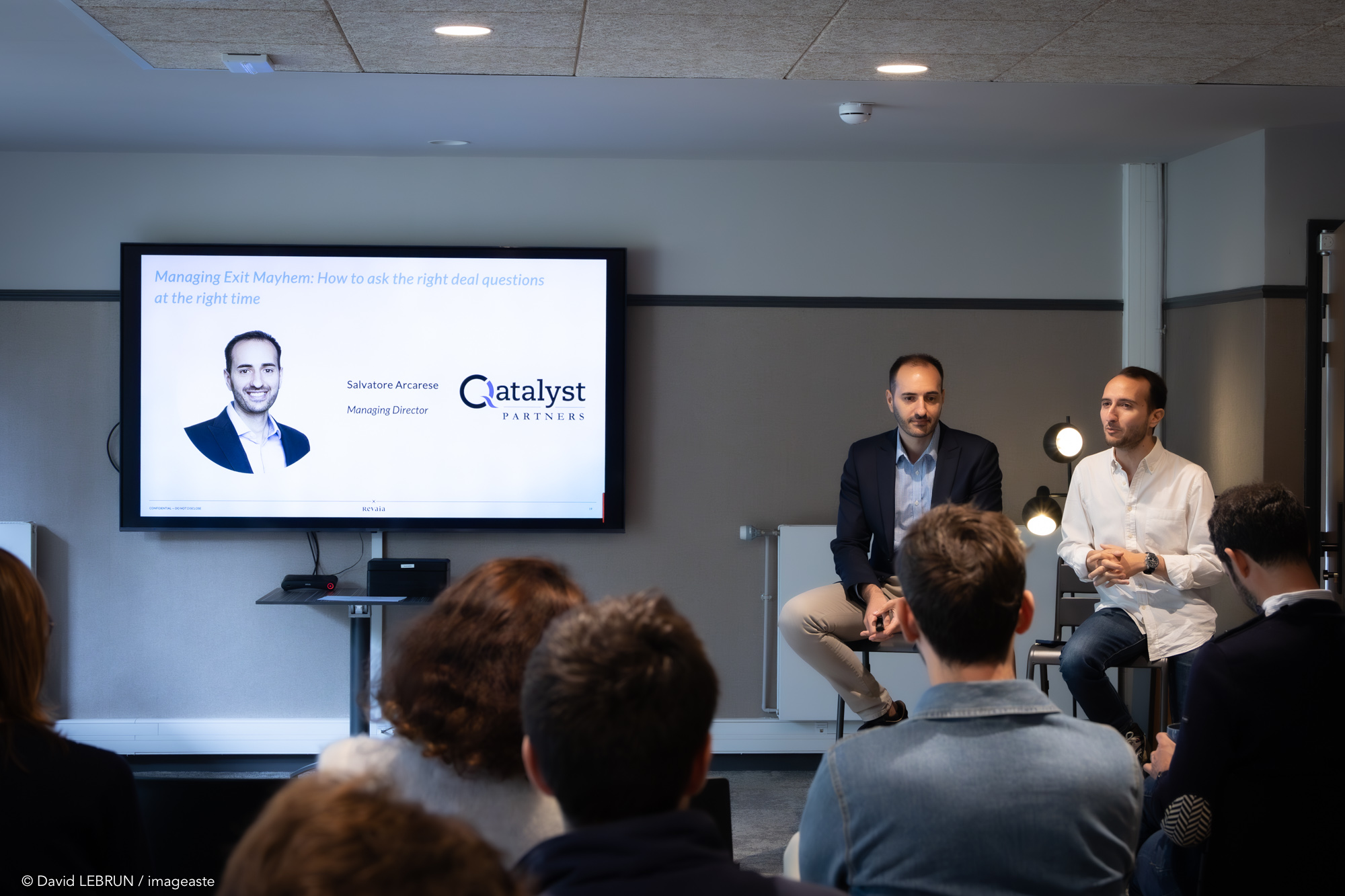
From left to right: Salvatore Arcarese and Morgan Kessous
Startups must actively find ways to get on the radar – even if they are not actively selling – by making personal connections with potential sponsors at key strategic players.
“If you expect somebody to pay a strategic market valuation for yourself and they've never heard of you or they don't have a personal relationship between founders and management, it’s going to be very hard,” Salvatore said.
Qatalyst recommends that entrepreneurs and founders map the strategic landscape, try to understand the potential acquirers of their company and build a relationship through such tactics as partnerships. Timing of deals can always be challenging, but building these relationships in advance can help both sides understand if there is a cultural fit as well as a strategic match, he said.
Culture can include everything from internal values to how the company treats customers as well as the satisfaction and motivation of employees.
“Probably the number one reason why a transaction doesn't happen is you don't find a match in valuation,” he said. “Number two is culture. Whenever there's not a good cultural alignment between buyer and seller, that's when you end up not having a transaction.”
***
Growing Pains: How To Scale Product Development Without Losing Your Sanity (or Your Team) with Bharat Guruprakash, Algolia’s Chief Product Officer
Bharat traveled from San Francisco where he has led Algolia’s product organization for three years. Before Algolia, Bharat was at cloud communications platform leader Twilio. In both cases, he oversaw ambitious product diversification strategies that were key to allowing the companies to scale.
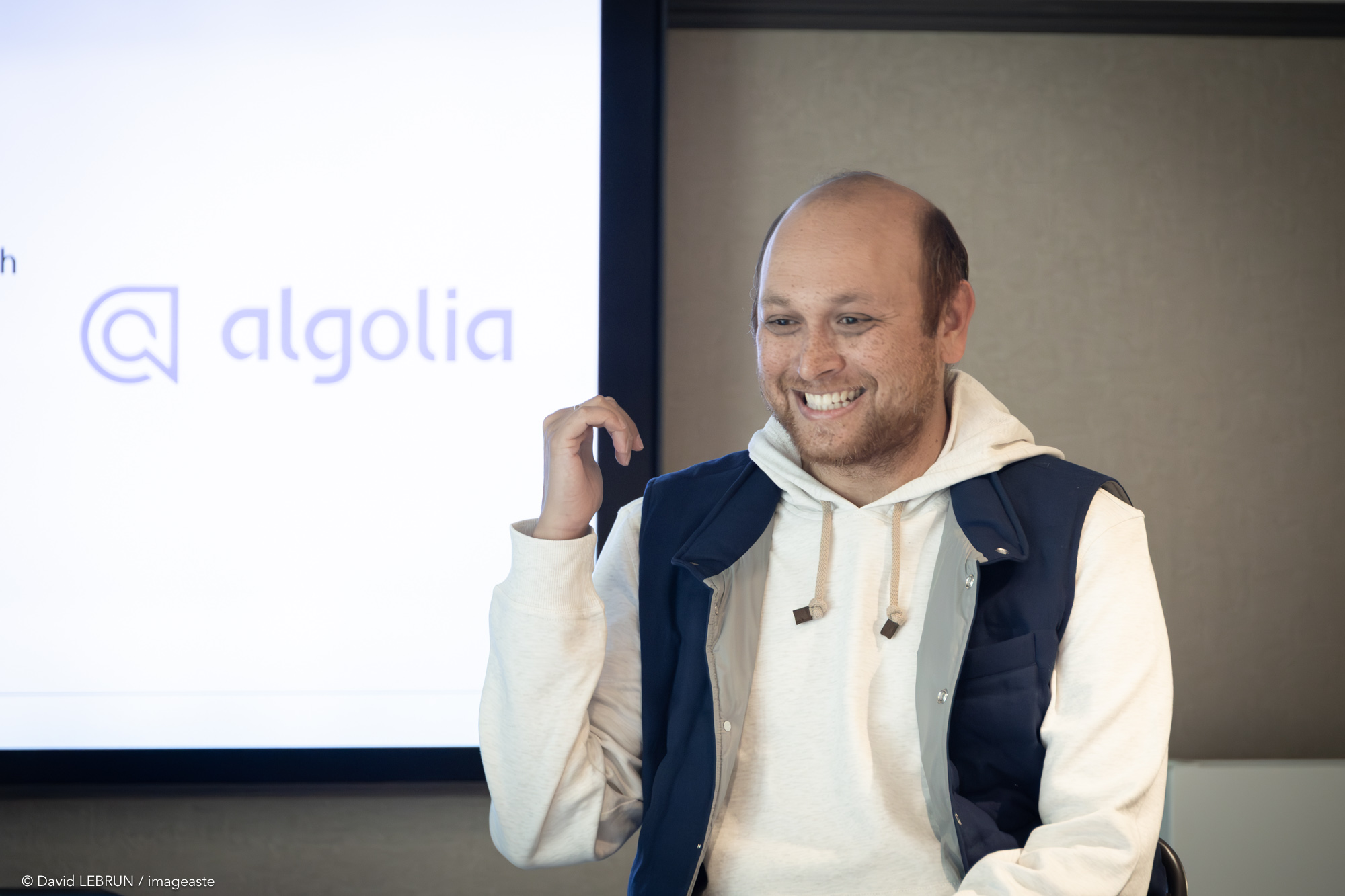
While Algolia was founded 12 years ago, when Bharat was hired in 2021 the company had recently transitioned from a founder-led organization to a new CEO Bernadette Nixon. He was charged with the mission of evolving the company beyond its core B2B search product.
Algolia had long used AI in its core product, but the shift to GenAI quickly became a key focus as customers expressed a desire for products that could leverage that potential. Navigating that process is not easy, but he recommended that companies look at the fundamentals by studying user behavior and trying to identify what information problems a GenAI-powered tool could solve for them.
“A lot of our large customers, especially the enterprise customers, are asking us constantly what we do with GenAI,” he said. “It's in the early innings because customers don't really know what to do with it and how to use it.”
***
Selling Out: How Two Founders Exited Their Companies and Lived To Tell the Tale with Clément Buyse, Co-Founder of PeopleDoc, and Alex Pachulski, Co-Founder of Talentsoft
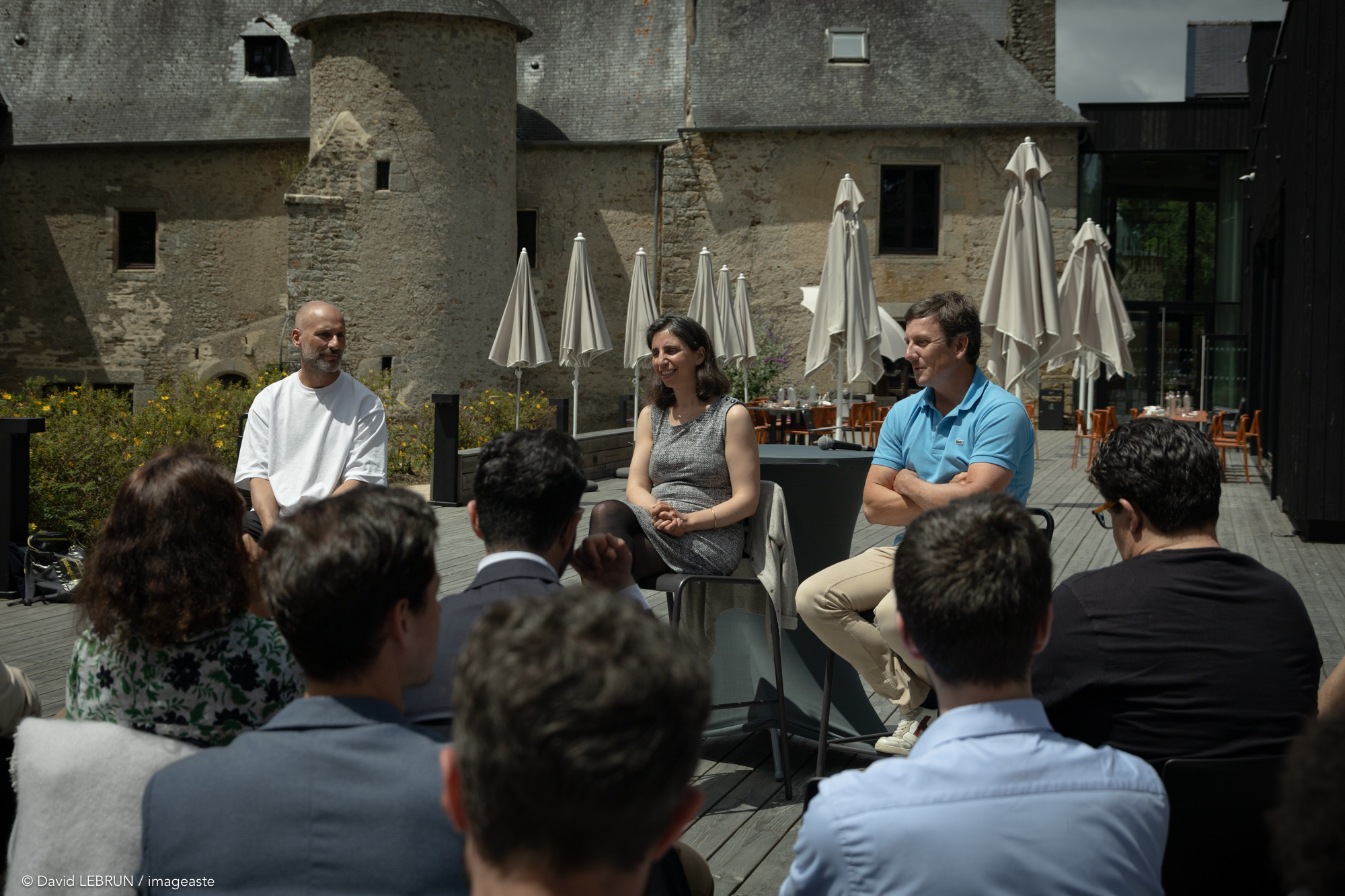
From left to right: Alexandre Pachulski, Alice Albizzati and Clément Buyse
While the European ecosystem has blossomed over the past decade, two of the biggest successful exits came out of France. PeopleDoc was acquired by Ultimate Software in 2018 in a deal valued at $300 million. Talentsoft was acquired by Cegid in 2021 in a deal valued at $550 million.
The details of each exit journey were quite different, But the two co-founders shared a common message: Founders should understand that an exit – whatever the type or the circumstances – is not the end of the story.
Instead, it’s a major accomplishment that confirms the value that has been created and allows those who contributed to the success – including employees and investors – to share in those benefits. But before they can embrace this major decision, Alex said founders need to take time to be introspective and understand their motivations as well as those of their team.
“The word ‘exit,’ it means the end of your adventure,” said Alex. “But actually, it's very related to the beginning of a new life…The exit is an alignment of factors, some that are intimate, some that are professional, and most of them don't depend on you…So be lucid and clear about your intentions and try to listen to what the signals are telling you. The first step is being aligned with yourself.”
Clément said founders should not be afraid to discuss eventual exits with their investors and teams. Because it’s a natural part of the startup process, understanding everyone’s expectations can help navigate the many decisions that come with any potential deal.
“It's not a founders-only decision process. You need to kill any exit-scenario-related taboo, to come up with a strategic plan while making this topic a continuous workstream” he said. “We realized that it had been some kind of an untouched item until we received our first unsolicited offer. We had to react quickly with little to no preparation. Luckily the outcome was positive.”
We’ll share more details from these sessions in future newsletters.